A road gully or house drain Southampton problem can be confusing after heavy rain, especially when water sits near the kerb, an outside drain fills, or a chamber cover stays wet. The visible water may look like one drainage issue, but the cause may sit in a private drain, a road gully, a public sewer, a surface water route or a shared system.
That difference matters because the next step depends on where the problem sits. A blocked private drain may need a drainage engineer. A road gully issue may need the council or highways team. A public sewer problem may need Southern Water.
Southampton Drains24 helps homeowners, landlords and businesses with drain unblocking, CCTV drain surveys, drain repairs and emergency drainage problems across Southampton and nearby areas.
Why road gully or house drain Southampton problems get confusing
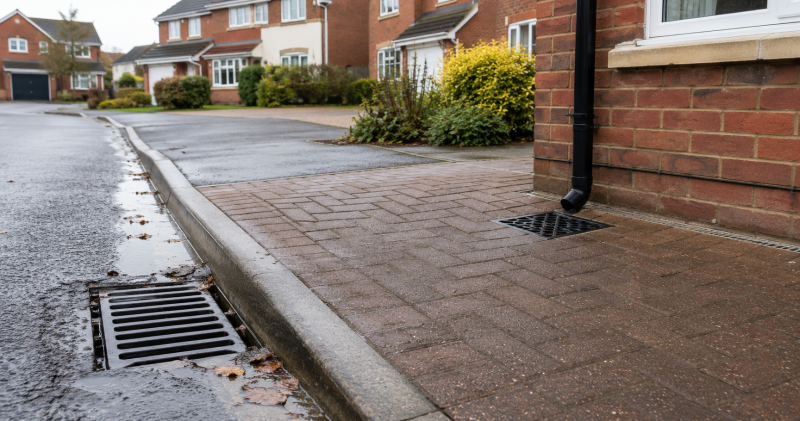
Many drainage points look similar from the surface. A grate near the kerb, a gully beside a downpipe and an inspection chamber on a driveway can all hold water during wet weather. However, they may belong to different parts of the drainage system.
A house drain usually serves the property. It may take foul water from toilets, sinks, baths, showers and appliances, or it may take rainwater from roofs and paved areas. A road gully usually sits at the edge of the road and takes surface water away from the highway.
Southampton City Council defines a road gully as a grate-covered opening at the edge of the road that drains surface water away. It also explains that a sewer collects water and waste from the drains of more than one property. You can read the council’s local guidance on its blocked drains page.
What is a road gully?
A road gully is the drain grate usually found at the kerb edge. It collects rainwater from the road surface and helps move it away from traffic and pavements.
Road gullies can collect leaves, silt, grit, litter and mud. During heavy rain, water may sit around the kerb while the system catches up. If the gully stays blocked after rainfall has passed, it may need reporting through the right local route.
A road gully is not the same as a house drain. Homeowners should not assume a kerbside gully belongs to their property just because it sits outside their home.
What is a house drain?
A house drain serves the property. It may connect toilets, sinks, baths, showers, kitchen waste, utility appliances, roof downpipes, yard gullies or driveway drainage, depending on the layout.
Some house drains carry foul water. Others carry rainwater. Some older areas may have combined drainage, where foul water and rainwater use the same wider sewer system. The visible cover or gully does not always show which route the pipe takes.
If a drain problem starts after toilet use, bath water, kitchen use or appliance drainage, the issue may sit in the private house drain rather than the road gully.
Road gully or house drain Southampton checks after heavy rain
After heavy rain, start by looking at where the water appears and what triggers it.
Check:
- Whether water sits mainly at the kerb or on your property.
- Whether the problem appears only during rain.
- Whether an outside drain fills after you use water indoors.
- Whether neighbours have the same issue.
- Whether a road gully has leaves, silt or debris over the grate.
- Whether a private chamber cover on your property stays full.
- Whether water comes up through a gully after toilet, sink or bath use.
- Whether foul smells come from a private drain or a public area.
These checks help narrow the likely route before you report the issue or call for help.
When the problem may be a private drain
The issue may sit in a private drain if only your property has symptoms. This can include slow toilets, slow sinks, a gully that fills after appliance use, or wastewater coming up through an outside drain.
Private drain warning signs include:
- One home affected, with no neighbour reports.
- A toilet, bath, shower or sink draining slowly.
- An outside gully filling after indoor water use.
- A chamber inside your boundary holding water.
- Bad smells near a private drain cover.
- Repeat blockages in the same drain run.
- Leaves, grease, wipes, silt or roots affecting the pipe.
Southampton City Council advises residents to contact a reputable specialist contractor where a drain fault or blockage cannot be resolved. For private drainage problems, drain unblocking can help restore flow and show whether the pipe needs further checks.
When the issue may be a sewer problem
A sewer problem may affect more than one property. It may also show as several chambers holding water, foul smells across a wider area, or drainage backing up without much water use inside your home.
Signs that the issue may be wider than your property include:
- Several neighbours have slow or backing-up drains.
- More than one chamber stays full.
- Wastewater appears outside the property boundary.
- Several homes report foul smells at the same time.
- Water backs up even when your home has used little water.
- The issue appears near a shared access route or public manhole.
Southampton City Council says problems with drains or overflowing manholes outside the boundary of your property usually lie with Southern Water. Southern Water also explains that public sewer and shared drainage issues may differ from private drainage responsibility.
When the issue may be a road gully or highway drainage problem
A road gully problem usually shows near the kerb or road edge. The gully may have leaves or silt over the grate, or water may sit in the road after heavy rain.
This does not always mean the gully has failed. Heavy rain can overwhelm surface water routes for a short time. However, if water does not drain away after rainfall has eased, the gully may need reporting.
Southampton City Council’s blocked-drain guidance says blocked road gullies are attended by the council’s highways strategic partner. Its flood reporting guidance also asks residents to identify whether flooding comes from a highway gully, manhole cover, nearby watercourse or a drain within their property boundary. You can use the council’s report a flood guidance where suitable.
Private surface water drainage and homeowner responsibility
Surface water can cause confusion because it may come from roofs, patios, driveways, gardens, road edges or shared areas. The location matters.
Southern Water explains that private surface water drainage pipes are the homeowner’s responsibility. It also says flooding from private foul drainage remains the homeowner’s responsibility up to the point where it connects with the public sewer.
This means water on private land may not automatically become a council or water-company issue. If the problem sits in a driveway drain, garden gully, private rainwater pipe or blocked domestic surface water run, the homeowner may need private drainage help.
Why Southampton surface water needs careful checks
Southampton has a strong surface water risk because it is a built-up city. Hard surfaces such as roads, roofs, driveways and paved gardens give rainwater fewer places to soak into the ground.
Southampton City Council says the city is particularly vulnerable to surface water flooding because of its urban nature. That makes it important to separate road drainage concerns from private drain problems.
If water pools after heavy rain, check whether the water comes from the road, a driveway, a private gully, a garden, a roof downpipe or a public surface water route. This helps you report the problem to the right place.
When a CCTV drain survey can help
A CCTV drain survey can help when the pipe route is unclear or the same private drain keeps blocking. The camera can show blockages, silt, roots, cracks, standing water, poor fall and unexpected connections in accessible pipework.
This helps when water appears near a property boundary, shared access path, driveway or outside chamber. It can also help confirm whether the problem appears to sit within the private drain run before the pipe reaches a shared or public section.
A CCTV survey does not decide legal responsibility by itself. However, it can give useful evidence about the route and condition of accessible drains.
When drain repairs may be needed
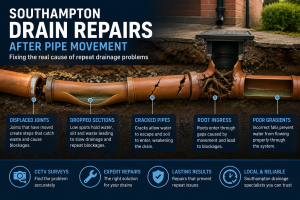
Some private drain problems come back because the pipe has damage. Clearing the drain may restore flow, but the same fault can catch waste again.
Drain repairs may need checking if there are signs of:
- Cracked pipework.
- Open joints.
- Root entry.
- Broken chamber connections.
- Standing water inside the pipe.
- Collapsed or distorted pipe sections.
- Silt collecting in the same area.
- Repeat blockages after clearing.
The repair method should match the fault, depth, pipe route and access.
When the problem becomes urgent
Some drainage problems need fast help, especially where foul water backs up or the home loses normal drainage.
Call for help quickly if:
- A toilet backs up and will not clear.
- Wastewater comes up through an outside drain.
- Several fittings stop draining at once.
- A chamber inside your boundary fills and stays full.
- Dirty water appears near doors or lower rooms.
- Strong drain smells come from a private chamber.
- A tenant, customer or shared building loses drainage.
- The same blocked drain returns soon after clearing.
For urgent private drainage problems, emergency drainage services can help restore flow and reduce further mess.
What homeowners can check safely before calling
Simple checks can help you explain the problem clearly. They can also save time when you contact a drainage engineer, Southern Water, Southampton City Council, a landlord or a managing agent.
- Check whether water appears during rain or after indoor water use.
- Ask immediate neighbours if their drains are affected.
- Look for road gullies blocked with leaves or silt.
- Check whether a private chamber inside your boundary holds water.
- Look for signs of water running from your driveway or garden.
- Notice whether the issue involves foul smells or clean rainwater.
- Keep old drainage plans, CCTV reports or repair notes handy.
- Avoid flushing wipes, grease or heavy paper while drains struggle.
Do not lift heavy or damaged drain covers if they look unsafe. Also avoid strong chemicals where dirty water has backed up, as they may not reach the main cause.
Who should Southampton homeowners contact?
The right contact depends on the likely source.
- For a private blocked drain, a drainage engineer can check and clear accessible pipework.
- For a suspected public sewer issue, Southern Water may need to advise.
- For a blocked road gully or highway drainage concern, Southampton City Council guidance should be checked.
- For private rented homes, tenants should contact the landlord or letting agent.
- For flats or managed buildings, residents may need the managing agent or freeholder.
- For active flooding, residents should follow Southampton City Council’s flood reporting guidance where suitable.
Where the source is unclear, a private drainage check can often help identify whether the problem sits inside your boundary or further along the system.
How to avoid repeat confusion
Good records make future drainage problems easier to handle. Homeowners often forget where drain covers sit or how the pipe route runs until something blocks.
- Keep photos of private drain covers and gullies.
- Save CCTV survey reports and repair notes.
- Keep road gully issues separate from house drain issues.
- Ask engineers where the private pipe appears to run.
- Keep gutters, gullies and channel drains clear of leaves.
- Check neighbour impact before assuming the issue is private.
- Report highway flooding through the right council route.
- Deal with repeat blockages before they become emergencies.
These steps help homeowners make better decisions next time water appears around a drain or gully.
Get a road gully or house drain Southampton problem checked
A road gully or house drain Southampton issue may involve private drainage, highway drainage, surface water, Southern Water sewers or shared property systems. The correct next step depends on where the water appears and what caused it.
Southampton Drains24 can help with drain unblocking, CCTV drain surveys, drain repairs and emergency drainage problems across Southampton.
If water backs up from a private drain, an outside gully keeps filling, or you are unsure whether the problem sits inside your boundary, getting the drain checked can give you a clearer answer.
FAQs
What is the difference between a road gully and a house drain?
A road gully usually sits at the kerb and drains surface water from the road. A house drain serves the property and may carry foul water, rainwater or both, depending on the drainage layout.
Who is responsible for a blocked road gully in Southampton?
Southampton City Council says blocked road gullies are attended by the council’s highways strategic partner. If the issue sits in a private drain, the homeowner may need a drainage contractor.
When should I call Southern Water?
Southern Water may need to advise when the problem appears to involve a public sewer, shared sewer or overflowing manhole outside the boundary of your property.
Can a drainage engineer help if I am unsure what the problem is?
Yes. A drainage engineer can check accessible private drains, clear blockages and use CCTV equipment where needed to understand the pipe route and visible pipe condition.
Can Southampton Drains24 help with private drain problems?
Yes. Southampton Drains24 can help with private drain unblocking, CCTV drain surveys, drain repairs and emergency drainage problems across Southampton.