Southampton drain problems in terraced homes can be harder to understand than a simple blocked sink or toilet. Older pipework, shared drainage runs, small rear access areas, extensions and previous property changes can all affect how drains behave.
A blockage may clear at first, but if the same drain keeps slowing, smelling or backing up, the real cause may sit deeper in the system. In many terraced homes, drainage issues are linked to older joints, shared runs, grease, silt, tree roots or pipework that has moved over time.
Southampton Drains24 helps homeowners, landlords and local businesses deal with blocked drains, drain unblocking, CCTV drain surveys, root removal, drain repairs and emergency drainage problems across Southampton and nearby areas.
Why Southampton drain problems can be different in terraced homes
Terraced homes often have compact drainage layouts. Pipework may run below rear yards, paths, side passages, kitchens, extensions or shared access areas before connecting into a larger drain or sewer.
Because of this, the first visible symptom does not always show where the real fault sits. A toilet may gurgle inside the property, but the blockage could be further along the external drain run.
Where several homes sit close together, shared drainage can also make responsibility and fault location less obvious. That is why repeated drainage problems often need proper checking rather than repeated clearing alone.
Common warning signs in terraced properties
Drainage problems often start with small changes. These signs may come and go at first, especially if the drain still allows some water to pass.
Common warning signs include:
- Slow-draining sinks, baths, showers or toilets.
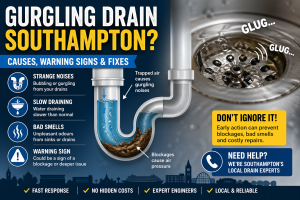
- Gurgling sounds from plugholes or toilets.
- Bad smells near drains, gullies or inspection chambers.
- Outside drains overflowing during normal use.
- Water backing up when another fixture is used.
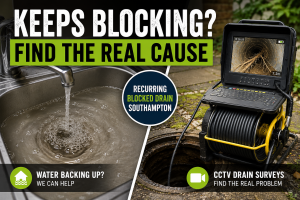
- The same drain blocking more than once.
- Water sitting in an inspection chamber.
- Silt, grease or debris visible in the drain.
- Several fixtures affected at the same time.
One warning sign may not confirm a serious fault. However, repeated symptoms suggest the drainage system needs closer attention.
Older pipework and repeat blockages
Older pipework can still work well when it remains sound, clean and properly aligned. Problems usually start when joints loosen, pipes crack, sections drop or the internal surface becomes rough enough to catch waste.
Once waste starts catching, grease, wipes, paper, food debris and silt can build around the same point. The drain may clear during a visit, then block again later because the restriction remains.
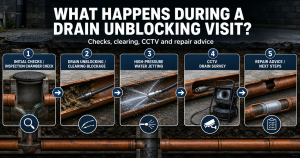
A drain unblocking visit can restore flow, but repeated blockages may need CCTV inspection to check the pipe condition.
Shared drainage runs in terraced streets
Some terraced properties connect into shared drainage runs before reaching the public sewer. This can make a blockage harder to trace because the affected section may not sit directly below the property where the problem first appears.
If more than one home has drainage problems at the same time, the issue may sit in a shared section. Inspection chambers, pipe direction and flow checks can help narrow down where the blockage is likely to be.
Understanding the location matters because it can affect the next step, especially where the problem may involve shared drainage or a lateral drain.
Grease build-up from kitchens
Kitchen waste is a common cause of Southampton drain problems in terraced homes. Fat, oil and grease may leave the sink as liquid, but it can cool and harden inside the pipe.
Once grease sticks to the pipe wall, food particles and other debris can collect around it. Older pipework, rough joints or poor fall can make this worse because waste has more places to catch.
Where kitchen drainage blocks repeatedly, clearing the pipe may solve the immediate problem. However, the drain should be checked if the same section blocks again.
Silt and standing water
Silt can collect where water does not move properly through the drain. This may happen because of poor gradients, a dropped section, a displaced joint or an obstruction that slows the flow.
Standing water gives silt, grease and debris a place to settle. Over time, the pipe capacity reduces and the drain becomes more likely to block.
If silt keeps returning after cleaning, it may point to a deeper issue inside the pipework rather than a one-off blockage.
Tree roots and older drain joints
Tree roots usually enter drains through existing weaknesses. Small cracks, open joints and damaged chamber connections can allow fine roots to reach the moisture inside the pipe.
Once roots enter, they catch waste and silt. The blockage may clear temporarily, but roots can return if the entry point remains open.
Where roots are found, root removal may need to be followed by CCTV inspection and repair advice.
When CCTV inspection is useful
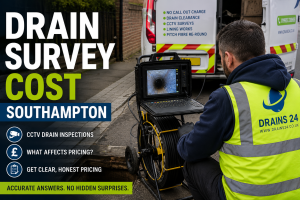
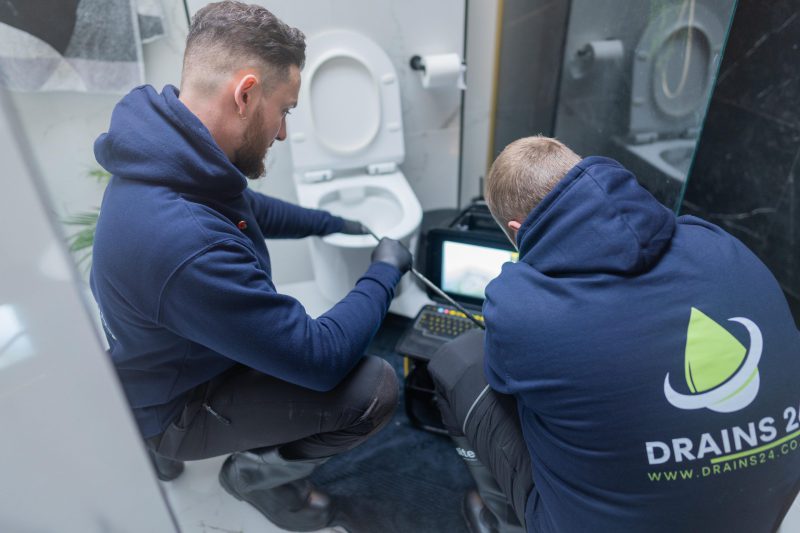
A CCTV survey can show what is happening inside the drain without digging first. This is useful when the cause of the problem is unclear, the blockage keeps returning or pipe damage is suspected.
A camera inspection of the drain can identify cracks, displaced joints, root entry, silt, standing water, poor gradients, scale and partial collapse.
This helps avoid guesswork. It also helps decide whether the drain needs cleaning, repair work, root removal or continued monitoring.
Drain problems after extensions or layout changes
Many terraced homes have changed over time. Kitchens may have moved, bathrooms may have been added, rear yards may have been paved and extensions may now cover older pipe routes.
These changes can make drainage problems harder to trace. Inspection chambers may be hidden, buried or difficult to access. Pipework may also carry more use than it did when the original drainage layout was installed.
Where drainage work links to building layout, waste pipes or access points, the UK Government’s Approved Document H for drainage and waste disposal gives useful background on drainage access, pipework and building-related drainage considerations in England.
When drain repairs may be needed
Not every blocked drain needs repair. Many drains only need proper clearing, flushing and testing.
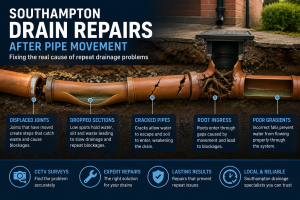
However, drain repairs may be needed where inspection shows cracked pipework, displaced joints, collapsed sections, root entry points or pipe movement.
Repair options depend on the fault, pipe condition, access and depth. Some localised defects may suit patch repair or lining. More serious damage may need excavation or replacement.
When the problem becomes urgent
Some drainage problems need fast attention. If foul water overflows, sewage backs up, toilets cannot be used or water enters the property, the issue should be treated as urgent.
Drainage problems can also become more disruptive in rental homes, shared houses, shops, cafés and other properties where several people rely on the same system.
For urgent problems, emergency drainage services can help restore flow and reduce disruption before further investigation is arranged.
How Southampton terraced homes can reduce repeat drain problems
Good habits can reduce avoidable blockages, especially where older pipework may already be more vulnerable.
- Keep fat, oil and grease out of kitchen sinks.
- Only flush toilet paper.
- Use sink strainers to catch food waste.
- Keep outside gullies clear of leaves and silt.
- Report repeated smells, gurgling or slow drainage early.
- Keep inspection chambers accessible where possible.
- Arrange CCTV inspection if the same drain blocks again.
- Get repair advice if roots, silt or standing water keep returning.
These steps cannot prevent every underground fault, but they help protect the system and make warning signs easier to spot.
Get repeat drain problems checked properly
Drain problems in Southampton terraced homes can start with everyday blockages, but repeated issues often need closer attention. Older pipework, shared runs, roots, silt, grease and poor gradients can all make the same drain fail again.
Southampton Drains24 can help with drain unblocking, CCTV surveys, root removal, emergency drainage services and drain repairs across Southampton.
If the same drain keeps blocking or warning signs keep returning, it is worth checking whether older pipework, shared drainage or a hidden fault is the real cause.
FAQs
What causes drain problems in Southampton terraced homes?
Common causes include grease, wipes, silt, older pipework, shared drainage runs, tree roots, displaced joints, poor gradients and property changes that affect drainage access.
Are terraced homes more likely to have shared drains?
Some terraced homes connect into shared drainage runs before reaching the public sewer. If several properties are affected, the blockage may sit beyond one private internal pipe.
When should I book a CCTV drain survey?
CCTV inspection is useful when the same drain blocks repeatedly, smells return, roots are suspected, or the cause of the blockage is unclear.
Can drain unblocking solve the problem?
Drain unblocking can solve many simple blockages. If the same drain blocks again, further investigation may be needed to find the underlying cause.
When are drain repairs needed?
Drain repairs may be needed if CCTV inspection shows cracked pipes, displaced joints, collapsed sections, root entry points, standing water or pipe movement.