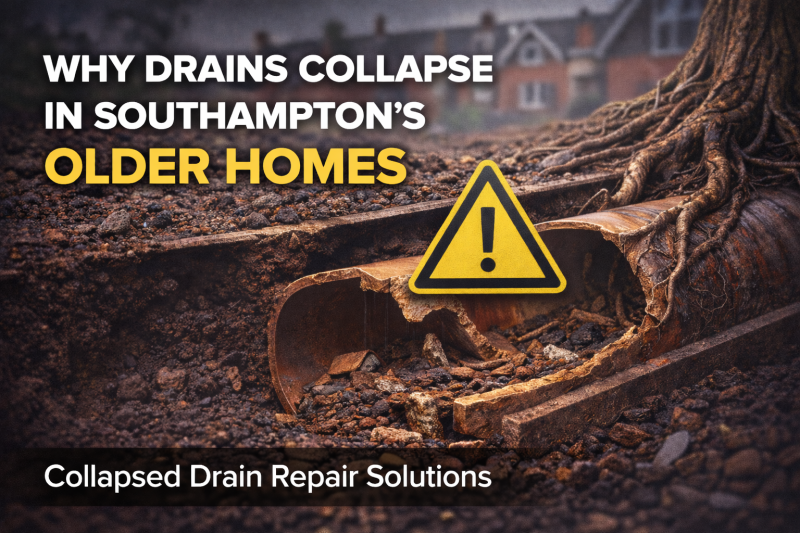
Older properties across Southampton often hide a problem that homeowners don’t see until it becomes urgent — underground pipe failure. While collapsed drains southampton issues can affect any property, they are far more common in homes built decades ago. Understanding why this happens helps you act early and avoid major structural and health risks.
The Age Factor: Materials That Don’t Last Forever
Many homes built before the 1980s used materials that naturally degrade over time. Clay pipes can crack, shift, and separate at the joints. Pitch fibre pipes — once widely installed — deform internally, reducing flow and eventually failing completely.
As these materials weaken, they become vulnerable to ground pressure, water saturation, and root intrusion. Over time, the pipe loses structural integrity, which leads to fractures, deformation, or full collapse.
Ground Movement and Winter Saturation
Southampton’s coastal climate brings heavy rainfall and fluctuating groundwater levels. When soil becomes saturated, it expands. Later, as it dries, it contracts. This cycle puts constant pressure on underground pipework.
Shallow drains, especially those under driveways or extensions, are exposed to additional stress. Vehicles, construction weight, and shifting soil can cause pipes to crack or sink. Eventually, sections of the system may collapse inward, blocking the flow completely.
Tree Roots: A Hidden Structural Threat
Mature trees are common around older Southampton properties. Roots naturally seek moisture and can enter through tiny cracks in drain joints. Once inside, roots expand and exert force on the pipe walls.
Over time, this growth worsens existing weaknesses. Roots trap debris, slow drainage, and accelerate structural damage. In severe cases, the pipe fractures entirely.
Signs Homeowners Often Miss
A collapsed drain doesn’t always start with a major flood. Early warning signs are often subtle:
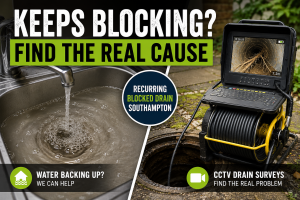
• Repeated blockages in the same area
• Slow drainage even after clearing
• Bad smells near external drains
• Sunken patches in lawns or driveways
• Damp areas around foundations
Because these symptoms develop gradually, many homeowners mistake them for simple blockages rather than structural failure.
How Professionals Diagnose the Problem
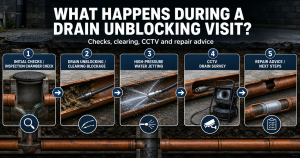
The only reliable way to confirm a collapse is through CCTV drain surveys. A specialist camera travels through the pipe, identifying:
• Fractures and deformation
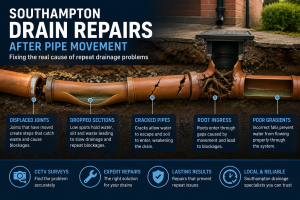
• Displaced joints
• Root intrusion
• Pipe sagging (“bellies”)
• Complete structural collapse
This evidence allows engineers to choose the right repair method instead of guessing.
Repair Options: Lining vs Excavation
Not all collapses require digging. Modern repair methods are designed to minimise disruption.
CIPP Drain Lining
When the pipe shape remains mostly intact, a resin liner can be installed internally. This creates a new structural pipe within the old one — no digging required.
Patch Repairs
For localised damage, a short liner reinforces only the affected section.
Excavation
If the pipe has fully collapsed or sections have sunk, excavation and replacement may be necessary.
Choosing the correct method depends on CCTV findings, pipe condition, and ground stability.
Why Ignoring a Collapse Is Risky
Delaying repairs can cause:
• Sewage leaks into soil
• Structural voids under driveways
• Foundation damage
• Increased repair costs
• Health hazards from contamination
Addressing the issue early protects your property and prevents escalation.
Prevention for Older Southampton Homes
Regular inspection is key. Homes with older drainage systems should consider periodic CCTV surveys. Root removal, descaling, and preventative lining extend pipe lifespan and reduce emergency callouts.
When to Call for Help
If you suspect collapsed drains southampton, professional assessment is essential. Early intervention reduces damage, cost, and disruption.
📞 Call Drains24 for expert help with collapsed drains southampton. Available 24/7 across Southampton.
FAQs
What causes most drain collapses in Southampton?
Ageing pipe materials, ground movement, and root intrusion are the most common causes.
Can a collapsed drain be repaired without digging?
Yes, if the pipe structure remains intact enough for CIPP lining.
How do I know if my drain has collapsed?
Repeated blockages, bad smells, or sunken ground are warning signs. CCTV surveys confirm it.
Are older homes more at risk?
Yes. Clay and pitch fibre systems degrade over time.
How long do repairs take?
Lining repairs can be completed in one day. Excavation takes longer.