
Drainage responsibility is one of the most common points of confusion for Southampton homeowners. When a blockage occurs, it isn’t always clear whether repairs fall to the property owner, a neighbour, or the water company.
Understanding where responsibility sits can prevent delays, disputes, and unnecessary expense when blocked drains Southampton residents encounter disrupt daily life.
Why Drain Responsibility Isn’t Always Obvious
Drainage systems are divided into private drains, shared drains, lateral drains, and public sewers. The point at which your pipework connects to the wider network often determines who is legally responsible for repairs.
Many homeowners assume everything beyond their property boundary belongs to the water company, but that is not always the case.
Private Drains: Homeowner Responsibility
Private drains serve a single property and usually run from the building to the point where they connect with other drainage.
In Southampton, homeowners are typically responsible for:
- Blockages within their property boundary
- Pipework serving only their home
- Maintenance and repairs to private drains
If a blockage occurs solely within these pipes, repair costs normally fall to the homeowner.
Shared Drains and Neighbouring Properties
Shared drains carry wastewater from more than one property. These are common in older Southampton streets and terraced housing.
Responsibility for shared drains can depend on:
- The location of the blockage
- How many properties are affected
- Whether the drain has been adopted
Disputes can arise when neighbours are unsure who should arrange repairs, particularly if the blockage affects only one home initially.
When the Water Company Becomes Responsible
Since changes to drainage law in 2011, many shared and lateral drains have been adopted by local water companies.
In Southampton, the water company is usually responsible for:
- Public sewers
- Adopted shared drains outside property boundaries
- Lateral drains connecting private drains to public sewers
If the blockage is confirmed within adopted pipework, the water company should manage and fund repairs.
Why Professional Assessment Matters
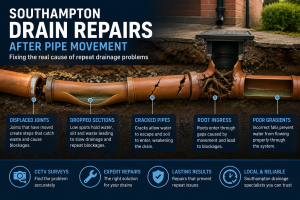
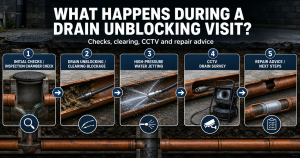
Determining responsibility often requires more than guesswork. CCTV drain surveys allow professionals to pinpoint:
- The exact location of the blockage
- Whether pipework is private or adopted
- Structural defects versus maintenance issues
This evidence helps homeowners take the correct next step without unnecessary cost.
What to Do If Responsibility Is Unclear
If drainage issues persist or involve multiple properties, it’s important not to delay action. Repeated blocked drains in Southampton can worsen quickly if left unresolved.
Avoid attempting repairs without clarity, as this may complicate liability later. Professional assessment provides the documentation needed to approach neighbours, insurers, or the water company with confidence.
Staying Informed Prevents Disputes
Drainage responsibility isn’t always straightforward, but understanding the basics puts homeowners in a stronger position. Knowing when repairs fall to you — and when they don’t — helps prevent disputes and ensures issues are addressed efficiently.
Frequently Asked Questions
Who is responsible for blocked drains in Southampton?
Responsibility depends on whether the drain is private, shared, or part of the public sewer network.
Are shared drains the water company’s responsibility?
Many shared drains have been adopted, but confirmation is required before repairs are arranged.
What is a lateral drain?
A lateral drain connects a private drain to the public sewer and may be the water company’s responsibility.
How can responsibility be confirmed?
CCTV drain surveys identify the location and ownership of the affected pipework.
Should neighbours be contacted if drains are shared?
Yes. Communication helps prevent disputes and speeds up resolution.